Daily walkaround checks are one of the most important responsibilities in commercial vehicle operation. They help drivers identify defects before vehicles are used, support operator compliance, and play a major role in road safety.
The DVSA has repeatedly stressed that walkaround checks are not simply best practice - they are a legal and safety priority for operators and drivers alike.
In this Walkaround Checks guide, we explain:
- what walkaround checks are
- why they are legally important
- what drivers should inspect
- how digital walkaround checks work
- how operators can improve compliance and reduce paperwork
We’ll also explain how TachoMagic’s digital walkaround check system helps modern operators manage everything in one place.
What Is a Walkaround Check?
A walkaround check is a daily visual inspection carried out before a commercial vehicle is driven. Its purpose is to identify safety defects or issues that could make the vehicle dangerous or non-compliant.
These inspections are often referred to as:
- HGV walkaround checks
- driver daily checks
- pre-use vehicle inspections
- daily defect checks
The DVSA states that drivers are legally responsible for ensuring vehicles are roadworthy before use.
This means drivers should not simply assume a vehicle is safe because it was used earlier in the day. A proper inspection should always be carried out before starting work.
Walkaround Checks Guide: Are they a Legal Requirement?
Yes.
Walkaround checks form part of a driver and operator’s legal responsibilities. The DVSA has made it very clear that failing to carry out proper daily inspections can have serious consequences.
Poor vehicle checks can contribute to:
- roadside prohibitions
- fines and enforcement action
- increased OCRS scores
- operator licence issues
- unsafe vehicles remaining on the road
The DVSA has described walkaround checks as both:
- a legal duty
- a safety priority
Official guidance:
- Carry Our HGV Walkaround Checks
- The Walkaround Check: A Legal Duty and Safety Priority
- Helping you carry out effective daily walkaround checks
Why Effective Walkaround Checks Matter
A proper walkaround inspection helps spot defects before they become dangerous, expensive, or disruptive.
Issues commonly identified during checks include:
- tyre damage
- faulty lights
- loose wheel nuts
- cracked mirrors
- bodywork damage
- fluid leaks
- insecure loads
- warning lights
These checks are important because even small defects can quickly become serious safety risks if missed.
For operators, effective checks also help:
- improve fleet safety
- demonstrate compliance
- reduce downtime
- improve maintenance planning
- protect OCRS scores
- create clear audit trails
The DVSA has highlighted that good daily checks are one of the strongest indicators of a safety-focused operation.
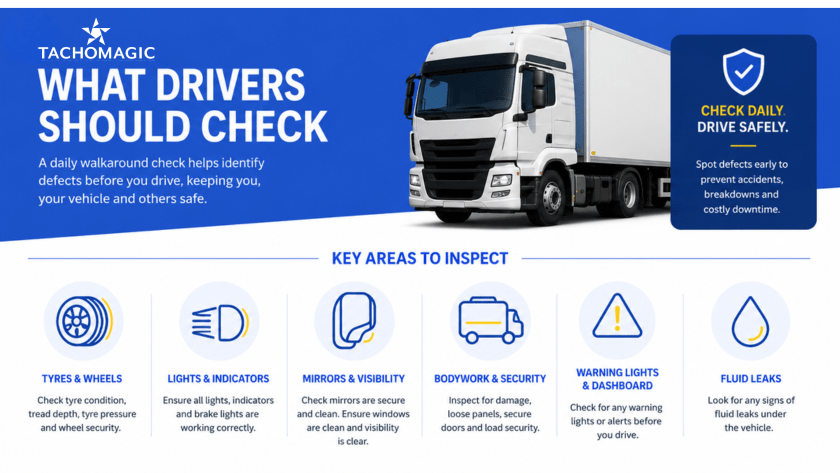
Walkaround Checks Guide: What Should Be Included in a Walkaround Check?
The exact checklist can vary depending on the vehicle type and operation, but most commercial vehicle checks should include the following areas.
Tyres & Wheels
Drivers should inspect tyres for:
- cuts and damage
- low tread
- incorrect inflation
- exposed cords
- loose wheel fixings
Tyre defects are one of the most common reasons vehicles receive prohibitions.
Lights & Indicators
Drivers should ensure all:
- headlights
- brake lights
- indicators
- side markers
- reversing lights
are functioning correctly.
Mirrors, Glass & Visibility
Drivers should confirm:
- mirrors are secure
- glass is not cracked
- visibility is unobstructed
- cameras (if fitted) are working properly
Vehicle Body & Security
Checks should include:
- bodywork damage
- loose panels
- insecure doors
- load security
- trailer condition
Dashboard & Warning Lights
Drivers should identify any warning indicators before beginning their journey.
Walkaround Checks Guide: How Frequently Must Walkaround Checks Be Done?
Walkaround checks should be completed before the vehicle is used each day.
If multiple drivers use the same vehicle, each driver should complete their own check before driving.
Checks should never become rushed or treated as a “tick-box exercise.” The DVSA has repeatedly warned operators that ineffective checks can still result in enforcement action even if paperwork exists.
Paper Walkaround Checks vs Digital Walkaround Checks
Surpisingly, many operators still use paper defect books and printed check sheets. While these can work, they often create unnecessary admin and make compliance harder to manage over time.
Common problems with paper systems include:
- lost forms
- incomplete records
- unreadable handwriting
- delayed defect reporting
- difficulty finding historic reports
Digital walkaround checks solve many of these issues.
With a digital system:
- checks are completed through an app
- defects can include photos or videos
- reports are stored automatically
- managers can see issues instantly
- audit trails are easier to maintain
This gives operators better visibility and stronger compliance records.
Digital Walkaround Checks with TachoMagic
TachoMagic now includes digital walkaround checks as part of the TADD subscription.
Drivers complete inspections directly through the app, while operators manage everything through the TachoMagic dashboard.
The system has been designed to help operators reduce paperwork, improve visibility, and simplify daily compliance management.
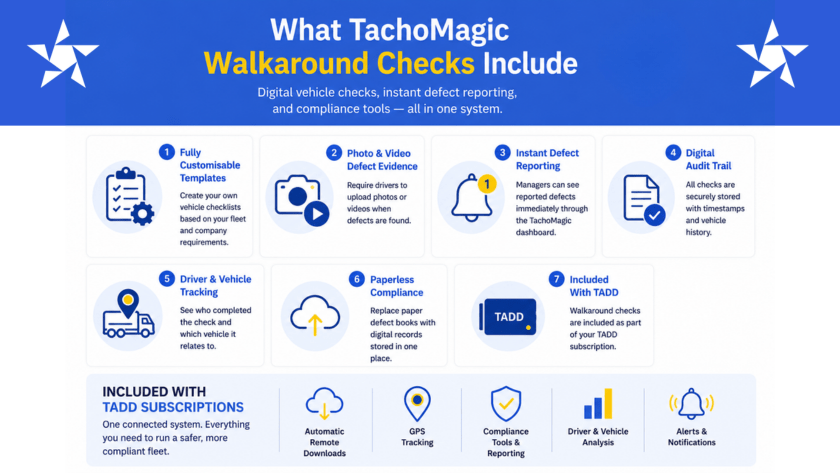
Features include:
- fully customisable check templates
- instant defect reporting
- photo or video evidence for defects
- digital report history
- audit trails
- central dashboard management
Because the system sits within TachoMagic, operators can manage:
- walkaround checks
- remote tachograph downloads
- GPS tracking
- driver and vehicle analysis
- compliance tools
all in one platform.
Customisable Walkaround Check Templates
Every transport operation works differently, which is why a rigid “one-size-fits-all” walkaround checklist often creates unnecessary frustration and admin. A vehicle check process that works for an HGV fleet may not be suitable for vans, coaches, or specialist vehicles.
TachoMagic allows operators to create fully customisable walkaround check templates based on their own vehicles, company policies, and operational requirements. This gives fleets far more flexibility and helps ensure drivers are checking the items that actually matter to their operation.
Templates can be tailored for:
- HGVs and lorries
- vans
- coaches
- specialist vehicles
- mixed fleets
Operators can also decide how defects should be reported. For example, the system can require drivers to upload photos, videos, or additional notes when issues are identified. This helps create clearer defect reporting, stronger audit trails, and more reliable evidence records for compliance purposes.
Free Walkaround Checks With TachoMagic
Digital walkaround checks are included as part of the TachoMagic Automatic Download Device (TADD) subscription.
The TADD is a device installed into your vehicle that automatically downloads driver card and vehicle unit data without the need for manual downloads. Once installed, it works in the background whenever the vehicle ignition is on, helping operators save time and reduce the hassle of managing tachograph compliance manually.
As part of the TADD subscription, managers also gain access to TachoMagic’s digital walkaround checks at no extra cost. Drivers can complete their daily vehicle inspections through the app, report defects instantly, and upload photo or video evidence where required.
The subscription also includes:
- automatic remote tachograph downloads
- vehicle analysis
- live GPS tracking
- route history and journey replay
- geofencing with SMS alerts
- real-time driver status information
- compliance reporting tools
By bringing tachograph downloads, GPS tracking, walkaround checks, and compliance management together into one connected system, operators can reduce admin, improve visibility, and avoid relying on multiple disconnected platforms.
Register Your Interest In Walkaround Checks
We are currently rolling out Walkaround Checks within TachoMagic.
If you would like more information or would like to register your interest, complete our contact form and a member of the team will be in touch.
Walkaround Checks Guide: Final Thoughts
Walkaround checks are one of the most important daily responsibilities in commercial transport.
When carried out properly, they help:
- improve safety
- reduce risk
- support compliance
- identify defects early
- protect operators and drivers
Digital systems are helping modern operators move away from paperwork and gain far better visibility over their fleets.
By combining digital walkaround checks with tachograph analysis, GPS tracking, and compliance tools, TachoMagic helps operators manage everything through one easy-to-use platform.
Walkaround Checks Guide Frequently Asked Questions
What is a walkaround check?
A walkaround check is a daily inspection carried out before a commercial vehicle is used. The purpose is to identify defects or safety issues that could make the vehicle unsafe or non-compliant. These checks are often referred to as driver daily checks, HGV walkaround checks, or pre-use vehicle inspections.
Are walkaround checks a legal requirement?
Yes. Drivers and operators have a legal responsibility to ensure vehicles are roadworthy before use. The DVSA has made it clear that effective walkaround checks are an important part of vehicle safety and operator compliance.
How frequently should walkaround checks be completed?
Walkaround checks should be completed before a vehicle is used each day. If multiple drivers use the same vehicle, each driver should carry out their own inspection before driving.
What is the purpose of a walkaround inspection?
The purpose of a walkaround inspection is to identify defects before a vehicle enters the road. This helps improve safety, reduce breakdowns, support compliance, and ensure defects are reported and resolved quickly.
What should drivers check during a walkaround inspection?
Drivers should inspect key safety areas including:
tyres and wheels, lights and indicators, mirrors and visibility, bodywork and load, security, warning lights, fluid leaks, general vehicle condition.
The exact checklist can vary depending on the type of vehicle being used.
How do you perform a walkaround check?
A walkaround check involves visually inspecting the vehicle and confirming all important safety items are in good condition. With digital systems like TachoMagic, drivers can complete checks using an app, follow custom checklists, and upload photos or videos of defects instantly.
What happens if a defect is found?
If a defect is identified, it should be reported immediately and recorded correctly. Depending on the severity, the vehicle may need to be repaired before it can be used safely.
Can walkaround checks be completed digitally?
Yes. Digital walkaround checks allow drivers to complete inspections through an app rather than using paper forms. Digital systems can also store records automatically, provide audit trails, and allow managers to see defects instantly.
Why are digital walkaround checks better than paper?
Digital walkaround checks help reduce paperwork, improve visibility, and make record keeping easier. Operators can instantly access reports, track defects more effectively, and maintain clear compliance records without relying on paper defect books.
Can walkaround checks include photos and videos?
Yes. Modern digital walkaround check systems can require drivers to upload photos or videos when defects are found. This helps provide clearer evidence and improves communication between drivers and operators.
Are walkaround checks included with TachoMagic?
Yes. Digital walkaround checks are included as part of the TADD subscription. Operators can manage walkaround checks, tachograph downloads, GPS tracking, and compliance tools through one connected system.
Can walkaround check templates be customised?
Yes. TachoMagic allows operators to create fully customisable check templates based on their vehicles and operational requirements. This helps ensure drivers inspect the exact items important to the fleet.
How long should a walkaround check take?
A proper walkaround check should take enough time for the driver to thoroughly inspect the vehicle. The DVSA advises that checks should never become a rushed “tick-box exercise.”